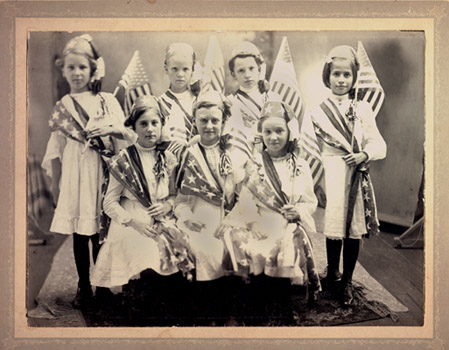
Seven American Angels - 1890
History of Photography
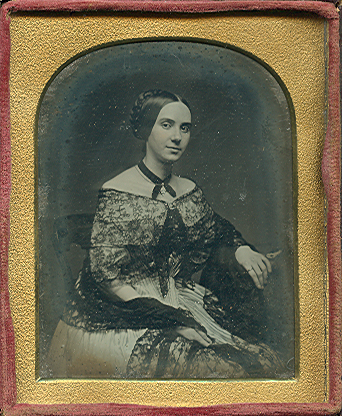
#1 Daguerreotype (the first photograph... peak years 1839-1855)
Invented in 1839 by Louis Daguerre, image was on silver coated copper and developed by exposing to mercury vapors.
Various sizes were available most common was 1/6th plate (2 3/4 x 3 1/4). France purchased patent from Daguerre thus making
process available royalty free to the world.
- "A mirror with a memory"
- Samuel Morse did more than any other American to bring this process to the USA.
- Similar in appearance to todays hologram... disappears when tilted.
- Images were reversed left to right
- Daguerre worked with Joseph Niepce for a time until his death in 1833.
- It's quite ironic that Daguerre produced only a handful of images with his amazing invention.
- Along with Daguerre the Niepce family was awarded a life-time pension from the French government.
- Dags were said to be the work of "Angels"... here I'd have to agree
- Most highly prized and collectible of all images.
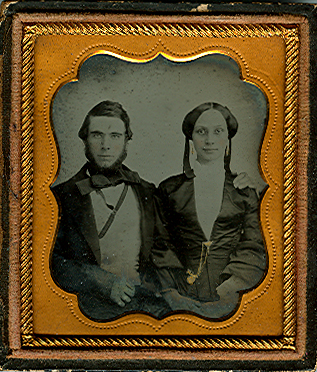
#2 Ambrotype (peak years 1855-1865)
These images were on glass and more cheaply made with more uneven quality. The back of the glass is painted
black to allow the viewing of the negative as a positive. However, many magnificent Ambros were made
and still exist. They were housed in the same type of cases as Dags, hence the confusion that continues to this day.
An easy way to tell the difference is that Ambortype does not dissapear when tilted.
- In the Daguerrian era... as well as Ambro, exposure times continue to be long even up to a minute. Any movement would soften
or blur the photo.
- Headrests and other apparatus were installed to help keep patrons perfectly still.
- Its true the world was in love with photography from the very start. However, the posing process was often compared
to going to the dentist.
- Sharp images of children are uncommon and cherished by collectors.
- Americans have always been fascinated with Dag and Ambro "Cases". Particulary the union cases or "gutta Percha" as they are often reffered to. This fondness has often come at the expense of the person housed there-in. In the 1920s they were turned into cigarette cases... Gasp!
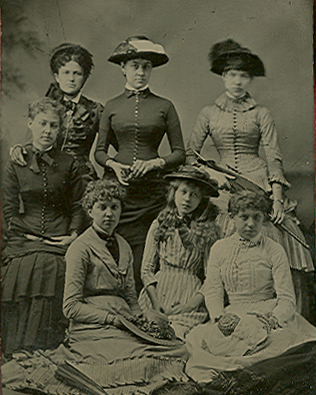
#3 Tintype (peak years 1858-1865)
Actually not made of Tin but rather thin sheets of Iron painted with Japanese varnish. Quality had lost another
round here, but these were less expensive and people were pleased. Very popular during The Civil War, photographers and
their wagons regularly turning up outside of troop encampments for days on end. While solders sent their images
(sometimes their last images) back to family and sweethearts.
- Melainotype and Ferrotype are its other names
- A Gemtype is a specially sleeved Tintype to match the size of CDV and to fit comfortably into photographic albums coming onto the scene at that time.
#4 Carte De Visite (peak years 1858-1865)
Small paper prints popular first in Europe and then in America. Also popular during The Civil War, in size about 2x4,
the same size as a common Tintype.
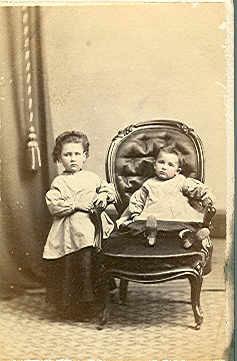
- Once photography on paper began, about 1860, larger images somtimes called imperial photographs were made.
- Steroviews also appeared about this time... Special stereo viewer needed to view these commercial in use, often showing
distant lands popular with tourists.
- "More than one CDV photograph was found amoung the human wreckage left on the field after the smoke of the battle had
cleared away" - Annon.
#5 Cabinet Cards (peak years 1870-1900)
these were larger and of higher quality, by now the photographers had honed the craft and were ready to shine... and they did.
Elaborate background became commonplace with retouching added often to soften wrinkles and blemishes. A Renaissance of creativity and a good
and popular business coincided giving us great images of America at that time. Many of these still abound giving us a look at the world more than 100 years ago.
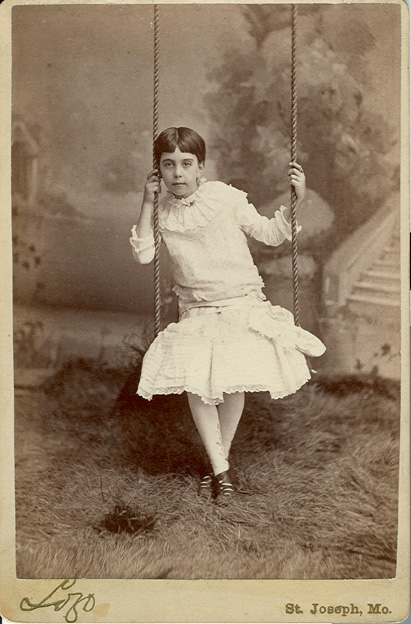
- Cabinet Cards were historicaly kept in curio cabinets with the dishes and glassware, hence the name.
- Sizes of about 4x6 and mounted neatly with studio name on cardboard
- George Eastmans browine camera and standardized film revolutionized photography making us all photographers (for better or worse) and it has been that way ever since.
In conclusion:
My hat is off to all the trail blazers and creative photographers of the past. Sometimes we forget the contributions of those who came before us in our modern world. These
photographers gave us a full 60 years (1840-1900) of professional images and open our eyes to the past
... if we will only look.
Page 1 | Page 2 | Page 3 | Page 4 | Links